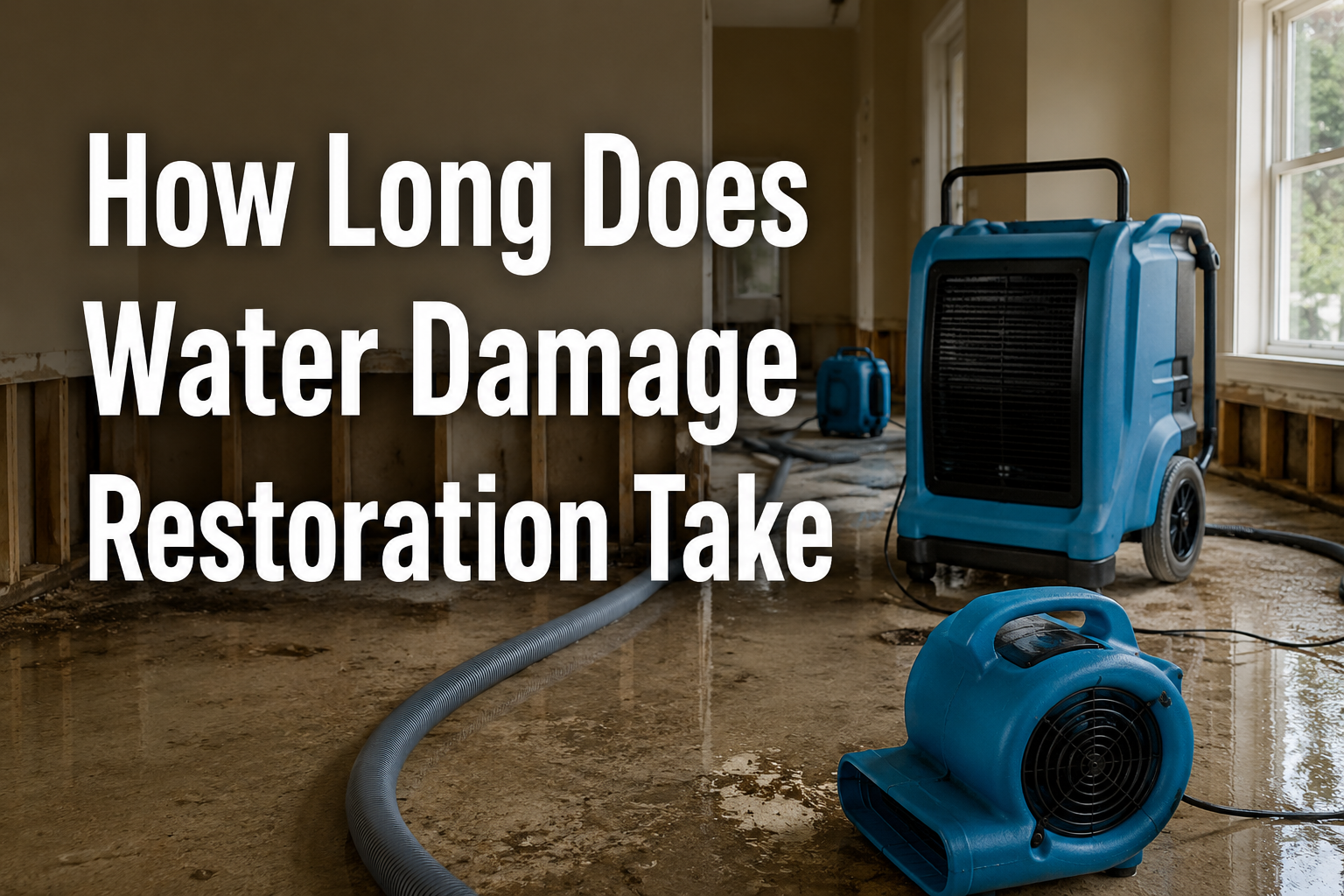
Most water damage restoration jobs take between 3 and 7 days to complete, though complex cases involving structural damage or mold can stretch to 2 to 4 weeks. The biggest factors are how much water entered, what materials got wet, and how fast a restoration crew arrived on scene.
This guide walks you through every phase of the process, what affects your specific timeline, and what homeowners across Rockville, Glen Burnie, Annapolis, Columbia, Silver Spring, and the rest of Maryland should expect from start to finish.
Understand the Phases of Water Damage Restoration
Restoration does not happen in one step. It moves through a clear sequence, and skipping or rushing any phase leads to bigger problems down the road, including mold and structural rot.
Here is how the process typically flows:
- Emergency water extraction (same day, within 2 to 4 hours of arrival): Standing water is removed using truck-mounted or portable extraction units.
- Assessment and moisture mapping (Day 1): Technicians use thermal imaging and moisture meters to find hidden water in walls, subfloors, and ceilings.
- Drying and dehumidification (Days 1 to 5): Industrial air movers and dehumidifiers run continuously until moisture readings return to safe levels.
- Antimicrobial treatment (Days 2 to 4): Applied to prevent mold growth in wet materials that cannot be immediately removed.
- Material removal and demolition (Days 2 to 7): Damaged drywall, flooring, insulation, and cabinetry are torn out if they cannot be dried in place.
- Reconstruction and finishing (Days 7 to 30+): Rebuilding walls, replacing flooring, repainting, and restoring the space to pre-damage condition.
Each phase depends on the one before it. Reconstruction cannot begin until moisture levels are certified dry, which is why accurate drying time matters so much.
Compare Timelines by Damage Category
Water damage is classified into three categories based on contamination level, and each one affects how long restoration takes. The Institute of Inspection, Cleaning and Restoration Certification (IICRC) defines these standards, and every reputable company including Vinis Renovation and Restoration follows them.
| Damage Category | Water Source | Typical Drying Time | Full Restoration Time |
|---|---|---|---|
| Category 1 (Clean Water) | Broken supply lines, overflowing sinks | 2 to 4 days | 3 to 7 days |
| Category 2 (Gray Water) | Washing machine overflow, dishwasher leaks | 3 to 5 days | 5 to 14 days |
| Category 3 (Black Water) | Sewage backups, floodwater, storm surge | 4 to 7 days | 2 to 6 weeks |
Category 3 jobs require full protective protocols and disposal of porous materials. In areas like Upper Marlboro and Prince George’s County, where basement flooding from storm surges is common, Category 3 damage is not unusual after heavy rain events.
Identify What Makes Your Timeline Longer or Shorter
No two water damage jobs are identical. Several variables can push your timeline well past the average or bring it in faster than expected.
Factors that extend your timeline:
- Delayed response, water sitting for more than 24 to 48 hours before extraction begins
- Mold already visible or present in air samples
- Water reaching structural framing, joists, or load-bearing walls
- Finished basements with multiple material layers (carpet, drywall, insulation)
- Large square footage affected across multiple rooms
- High ambient humidity, which is a real issue in Anne Arundel County and Severna Park during summer months
Factors that shorten your timeline:
- Calling for help immediately, ideally within 1 to 2 hours of discovering damage
- Clean water source with no contamination
- Hard flooring instead of carpet and pad
- Good air circulation and access for equipment placement
- Smaller affected area, typically under 200 square feet
Maryland summers bring high humidity that slows drying significantly. In Ellicott City, Greenbelt, and Laurel, average summer relative humidity often exceeds 70 percent, which means drying equipment works harder and longer than it would in drier climates.
Review How Long Drying Equipment Runs
The drying phase is where most of your timeline sits. Equipment runs 24 hours a day, 7 days a week until moisture readings drop to acceptable levels. This is not something you can speed up by opening windows alone.
| Material Type | Average Drying Time | Notes |
|---|---|---|
| Hardwood flooring | 4 to 7 days | May require floor mat drying systems |
| Drywall (gypsum board) | 3 to 5 days | Often removed if wet more than 24 to 48 hours |
| Concrete slab | 7 to 14 days | Slow to release moisture, common in Bowie and Crofton slab homes |
| Carpet and pad | 1 to 2 days | Pad almost always removed and discarded |
| Wall cavity insulation | 3 to 6 days | Fiberglass retains moisture, often removed |
| Subfloor (plywood or OSB) | 4 to 8 days | Critical to dry fully before new flooring goes down |
Technicians check moisture readings every day and log the results. Your crew should provide you with daily moisture logs so you can track progress and understand where the job stands.
Understand Mold Risk and How It Changes the Timeline
Mold can begin growing within 24 to 48 hours of water exposure under the right temperature and humidity conditions. Once mold is confirmed, remediation must happen before restoration can proceed, which adds time and cost to the project.
In Howard County, Montgomery County, and the Potomac area, older homes with less ventilated crawl spaces and basements are particularly vulnerable. Mold remediation typically adds 3 to 7 additional days to your project timeline depending on the scope.
Vinis Renovation and Restoration conducts moisture mapping and antimicrobial treatment during every water damage job to reduce the risk of mold taking hold before drying is complete.
Signs that mold is already present and will extend your timeline:
- Musty or earthy smell in the affected area
- Visible black, green, or white spots on walls, ceilings, or framing
- Air quality testing showing elevated mold spore counts
- Water that sat untreated for more than 48 hours
If mold remediation is required, most Maryland counties including Montgomery County require specific disposal procedures for contaminated materials. Your restoration contractor should be familiar with local requirements before any demolition begins.
Plan for the Reconstruction Phase in Maryland Homes
Once the structure is dry and cleared, reconstruction begins. This is where the timeline varies the most because it depends on how much was damaged and what permits or inspections are needed.
In Maryland, permits are often required for work that involves electrical systems, structural changes, or significant drywall replacement. Anne Arundel County, Howard County, and Prince George’s County each have their own permit processing times, which can add days or weeks to your schedule.
Typical reconstruction timelines for common repairs:
- Drywall replacement in one room: 2 to 4 days including tape, mud, and paint
- Hardwood or LVP flooring replacement: 3 to 5 days
- Cabinet replacement in a kitchen or bathroom: 5 to 10 days
- Full basement finish rebuild: 3 to 6 weeks
- Structural framing repair: varies widely, 1 to 4 weeks
Getting materials ordered quickly matters. Supply chain delays on specific flooring or cabinet styles can add one to two weeks to an otherwise straightforward job. Your contractor should confirm material availability before demolition begins so there is no gap between drying and rebuilding.
FAQs on How Long Does Water Damage Restoration Take
Can I stay in my home during water damage restoration?
It depends on the scope. Small, contained jobs like a single bathroom leak usually allow you to stay. Large jobs with industrial drying equipment running in living spaces, or any job involving sewage or mold, typically require temporary relocation. Your restoration crew should advise you on safety before work begins.
How long does it take for water damage to dry out on its own without equipment?
Without professional drying equipment, structural materials can take weeks to dry, and mold often forms long before that happens. Professional air movers and dehumidifiers can dry most spaces in 3 to 5 days that would otherwise take 3 to 5 weeks naturally. Waiting is almost always more expensive in the long run.
Does water damage restoration take longer in older homes?
Yes, often significantly longer. Older homes in areas like Silver Spring, Annapolis, and Ellicott City frequently have plaster walls, older insulation types like vermiculite or fiberglass batts, and less accessible wall cavities. All of these materials hold moisture differently and may require more demolition before drying is effective.
How long does insurance take to approve water damage restoration work?
Most insurance carriers respond to initial claims within 24 to 72 hours. Full approval for reconstruction work can take 3 to 10 business days depending on the size of the claim and whether an adjuster inspection is required. A good restoration contractor will document everything thoroughly to help speed up your claim.
What happens if water damage is not treated quickly enough?
Water sitting for more than 24 to 48 hours begins degrading drywall, swelling wood framing, and creating conditions for mold growth. After 72 hours, Category 1 clean water can degrade to Category 2 due to bacterial growth. The longer water sits, the longer and more expensive the restoration becomes.
Is 3 to 7 days really enough time to dry out a flooded basement?
For a moderately flooded basement with concrete floors and block walls, yes, 3 to 7 days of professional drying is usually sufficient for the drying phase. However, if the basement is finished with drywall, carpet, and insulation, and if floodwater sat for more than a day, plan for 7 to 14 days of drying plus additional time for reconstruction.
Wrap Up and Next Steps
So, how long does water damage restoration take? For most homes in Maryland, the drying phase runs 3 to 5 days and total restoration including reconstruction takes 1 to 3 weeks. The faster you act after discovering damage, the shorter and less costly the process will be.
If your home in Rockville, Bowie, Columbia, Laurel, Severna Park, or anywhere across the Maryland area has been affected by water damage, do not wait. Contact Vinis Renovation and Restoration today at +14433241606 to schedule an emergency assessment and get your timeline started right.